


The Hidden Cost of Reciprocal Link Schemes
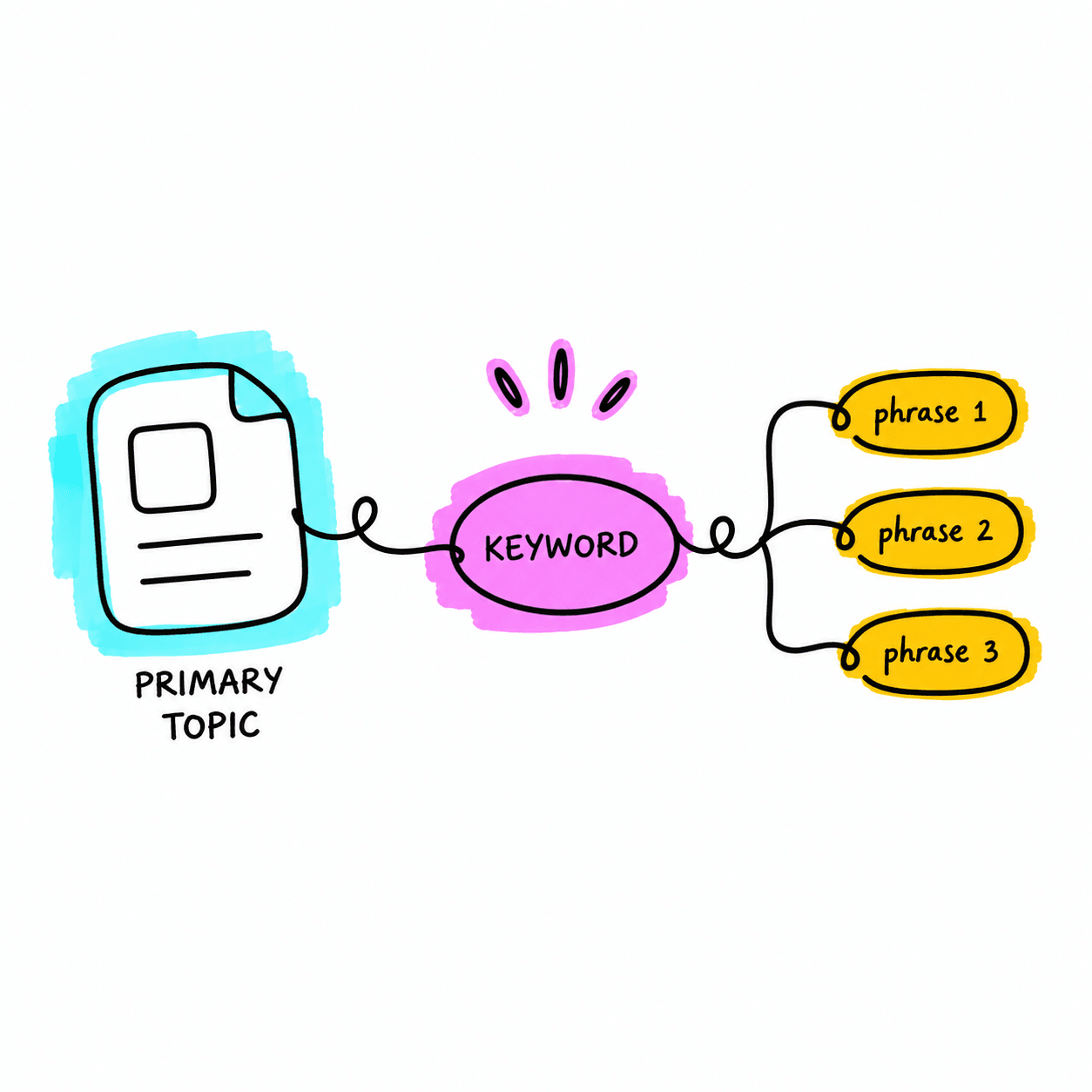
Reciprocal linking is the oldest trick in SEO. You link to me, I link back to you, we both get a backlink, and our DR goes up. It feels like a fair trade — two publishers helping each other out. So why does Google treat it as a manipulation pattern?
Because it almost always is one. And the cost of running a reciprocal program shows up in places most operators never think to look.
The footprint problem
A single A↔B reciprocal link is not, by itself, a violation of anything. Two friendly bloggers cross-referencing each other in good faith have done this since 2003 and nothing bad will happen to them.
The problem is what shows up at scale. When a domain has a high *percentage* of its inbound links matched by an outbound link to the same domain, that ratio becomes a footprint. Ahrefs surfaces it. Search Console surfaces it. And Google's spam-detection models — which now use graph-based features rather than just rule lists — flag it as a coordinated linking signal.
The exact ratio at which the footprint becomes actionable varies by niche and overall link profile. But internal experiments at agencies that publish their data put the threshold somewhere between 15% and 25% reciprocal density. Above that, sites consistently see ranking drag even when no single link is "bad."
The audit-trust problem
Even if Google never penalizes you, reciprocal schemes hurt you in a less visible way: they ruin your standing with the editorial publishers you actually want links from.
Real publishers vet inbound link requests. The first thing a careful editor does is look at the requester's outbound link page. If they see a list of swap partners — or worse, if they see their own site already linked from yours as part of a pre-emptive trade — they decline. They assume you're running a scheme, and they don't want to be in it. You've burned a relationship before you ever opened one.
This is the cost that compounds. A reciprocal-heavy site can spend years building a reputation as "the kind of operator who trades links," and that reputation closes doors to exactly the editorial placements that would actually move the needle.
The defensibility problem
Reciprocal links are also brittle. If your swap partner gets penalized, sold, or rebranded, you inherit the damage. If they decide to clean up their outbound links one weekend, half your backlink profile evaporates overnight.
This is rarely talked about, but it's how a lot of "mysterious" ranking drops happen. A team builds a site over two years, hits a comfortable position, and then one of their three biggest reciprocal partners is acquired and de-listed. The site loses 30% of its referring domains in a month, and nobody can figure out why traffic cratered.
Editorial links don't have this property. A genuine inbound link from a publisher who actually values your work doesn't get pulled when ownership changes hands, because it was earned, not arranged.
The "three-way swap" doesn't fix it
A common workaround is the triangular trade: A links to B, B links to C, C links to A. No two-way pairs, no obvious footprint.
This worked for a while in 2015. It does not work in 2026. Modern link-graph analysis traces cycles of any length, and three-way cycles are particularly distinctive because they're rare in natural editorial linking. Networks built around triangular trades are routinely identified and devalued; the only thing the extra hop buys you is plausible deniability with your client until the de-indexing arrives.
The cooperative alternative
The way out is not to abandon link building. It's to abandon the *reciprocal* assumption.
A well-designed cooperative network can give publishers everything they want from a swap — discoverability, referral traffic, and a path to building authority — without the footprint. The mechanism is simple: members earn credits by hosting links from other members, then spend those credits to earn placements on a *different* set of sites. Site A and Site B can never link in both directions. There's no cycle to detect because there's no cycle to begin with.
That's the model HappyLinks runs, and it's the model we expect more networks to adopt as the spam-detection arms race continues. It preserves the economic logic of "I'll help you discover other publishers, you help me" — but it routes around the structural problem that makes reciprocal links risky.
What to do this quarter
If you've inherited a reciprocal-heavy program:
- Audit your reciprocal density. Pull your outbound links, cross-reference against your inbound links, and calculate the percentage that match.
- Don't panic-prune. Removing many outbound links at once is itself a signal. Phase it over months.
- Stop adding new pairs. Every new reciprocal arrangement deepens the hole.
- Earn editorial replacements first. Build the new pipeline before you tear down the old one.
Reciprocal linking isn't a strategy. It's a shortcut with a slow-acting cost. The operators who notice that cost in 2026 are the ones who'll still be ranking in 2028.